
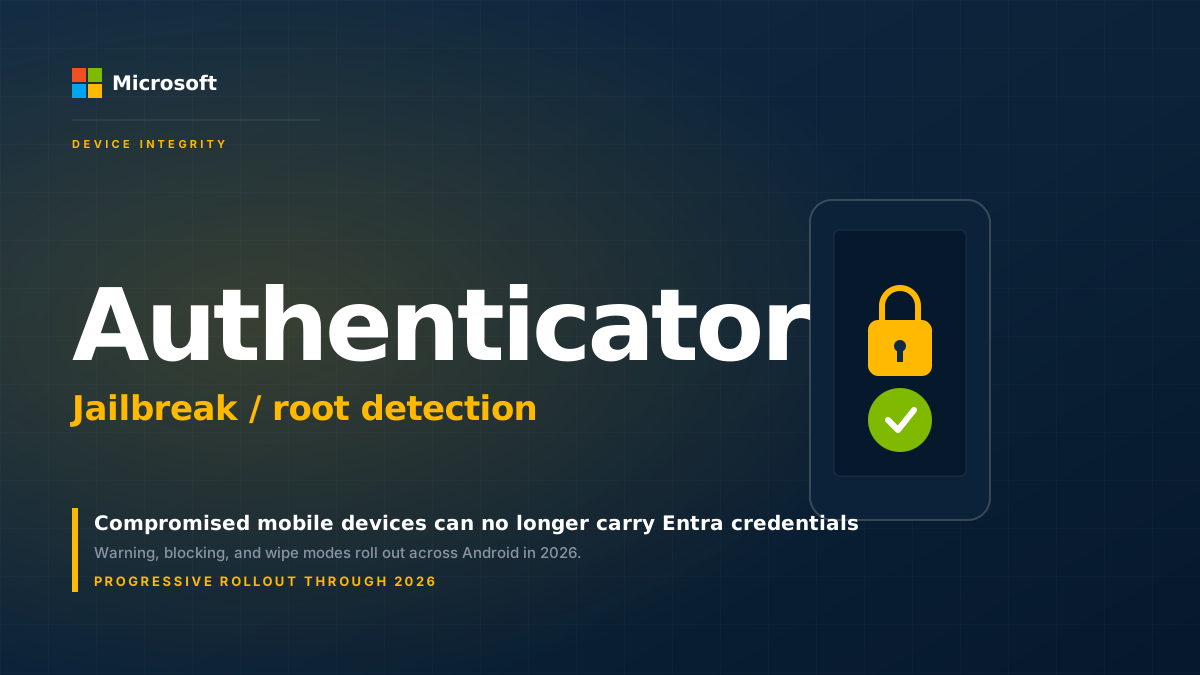
In February 2026, Microsoft began rolling out jailbreak and root detection for Microsoft Entra credentials inside the Microsoft Authenticator app on Android. The progression is deliberate — warning mode first, blocking mode next, and ultimately a wipe mode that removes Microsoft Entra accounts from devices that fail integrity checks. The end-state is simple: a phone that has been rooted, jailbroken, or otherwise tampered with cannot continue to act as an MFA second factor for a corporate Microsoft 365 identity.
Why this matters
Authenticator-based push approval has become the most common second factor for Microsoft 365 sign-in. That makes the device hosting the Authenticator app a high-value target: a compromised phone that still has access to the corporate Authenticator profile is, in practice, a path to MFA bypass for the user. Microsoft’s integrity check closes that gap by ensuring the device itself meets a minimum security posture before it can mint MFA approvals. It is the kind of platform-level hardening that does not get headlines but quietly removes one of the most common attack chains used against business identities.
What the rollout looks like
The rollout is staged. In the first phase, affected users receive a warning that their device is detected as compromised but can continue to use Authenticator. In the next phase, sign-in approvals are blocked on those devices and users are prompted to migrate to a compliant device. Finally, the wipe mode removes the Authenticator profile from non-compliant devices entirely. This phasing is meant to give IT teams time to identify affected users, communicate the change, and get those users onto trusted hardware before any blocking takes effect.
Operational implications
Three things matter for IT teams. First, you should expect to discover a small population of users running on unofficial Android builds or rooted devices that have been quietly using Authenticator for years. These users will surface as warnings and need a migration path. Second, the change reinforces the broader Microsoft direction: identity is the security perimeter, and the perimeter now includes the integrity of the device that holds the credential. Third, the same shift is going to push more organizations to enforce Conditional Access policies that require compliant devices for sensitive applications — that is the right adjacent control to put in place alongside this rollout.
How Lorexus engages
Our practice helps Microsoft-aligned organizations align their Conditional Access policies, Intune compliance baselines, and Authenticator deployment so that integrity checks like this one slot cleanly into an existing security model rather than catching teams off guard at rollout time.